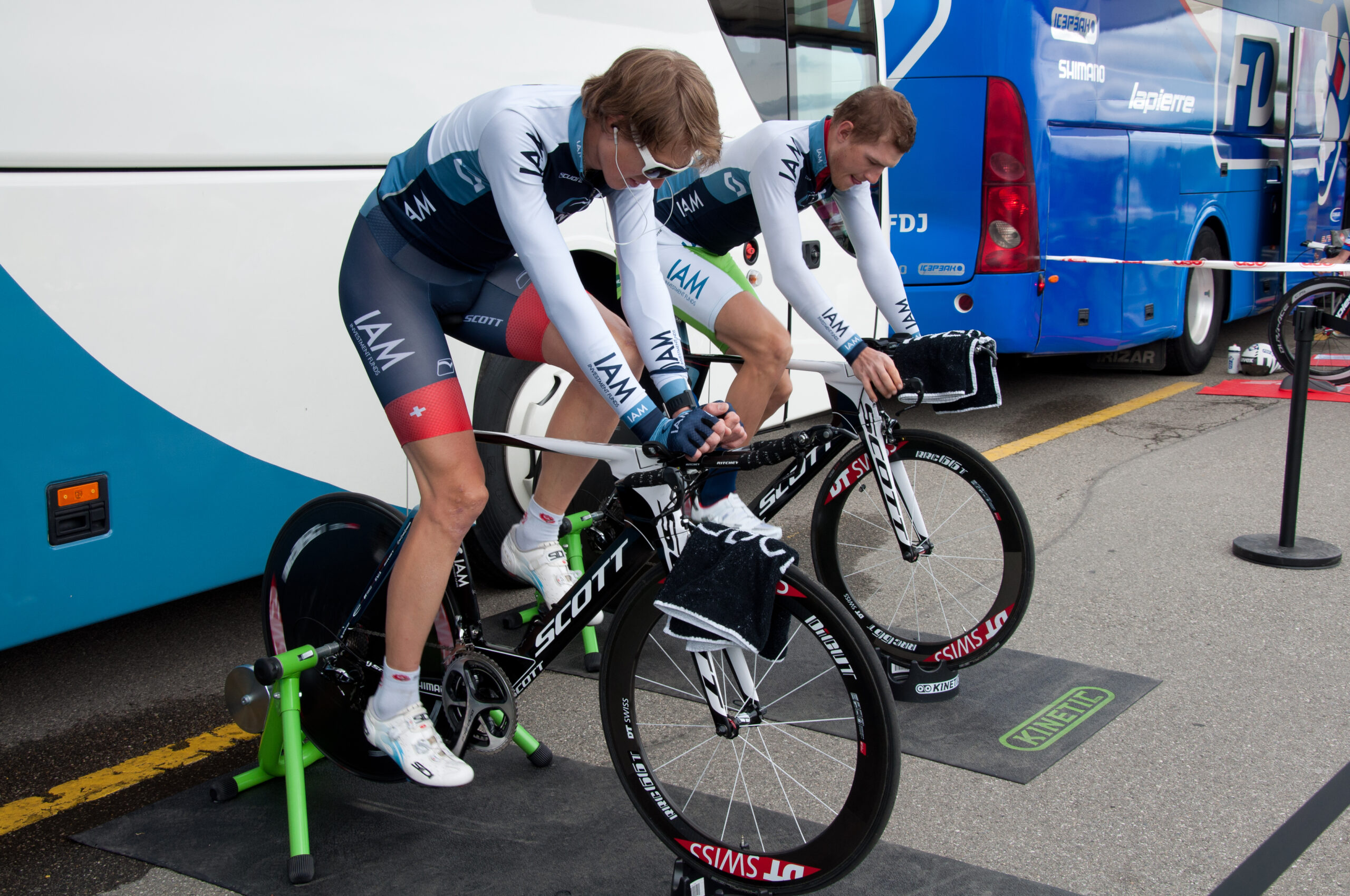
To support the importance of this factor of human physiology, In a study, it was valued in what values the efficiency was in each cyclist and then each cyclist competed in a counterreloj test.
Through a statistical analysis, The scientists observed that around 30% of the differences between the times of each other could be explained by total efficiency. And although the lactate threshold and maximum oxygen consumption could explain a higher percentage of the variance, That is why it is insignificant.
The key is that mechanical efficiency is one of the few parameters that even professionals continue to improve over the years.. For this reason, experienced athletes present higher values than novices, since it is a parameter closely linked to experience, to the volume of repetitions.
How more times do you repeat an action, More efficient becomes your body to perform it. From here also that cyclists are good by bike and not running, For example, Although agonist muscles in both actions are practically the same. Because even being two actions in which a great load is put on the lower train they have completely different coordinative patterns and the efficiency is very specific to each action, that is to say, The efficiency in a cyclist can only value it on the bike.
Some of the physiological mechanisms responsible for generating these changes in total efficiency are: the transformation of the type of muscle fibers, Changes in the contraction speed of muscle fibers and changes in mitochondria (cells responsible for sub -administration of energy to the muscles through the different energy substrates: fats, carbohydrates and amino acids).
And apart from making the same gesture again and again, Can you do something else to improve it? Well, it turns out that, since according to Jobson et al. (2012) It seems that high intensity exercise is the most powerful stimulus to generate changes in total efficiency, yes indeed, If we look for short -term changes since, As mentioned above, The ideal is to add hours about the bike to improve.
Finally, According to the American Council on Exercise, lower body stretches also help improve efficiency, since flexible joints require less energy to move through greater ranges of motion.
It also seems that changes in biomechanics of the bike can help improve efficiency (in the case of carrying a bad posture), But not for that reason, The change in connecting rods or pedaling type must necessarily behave improvements.