

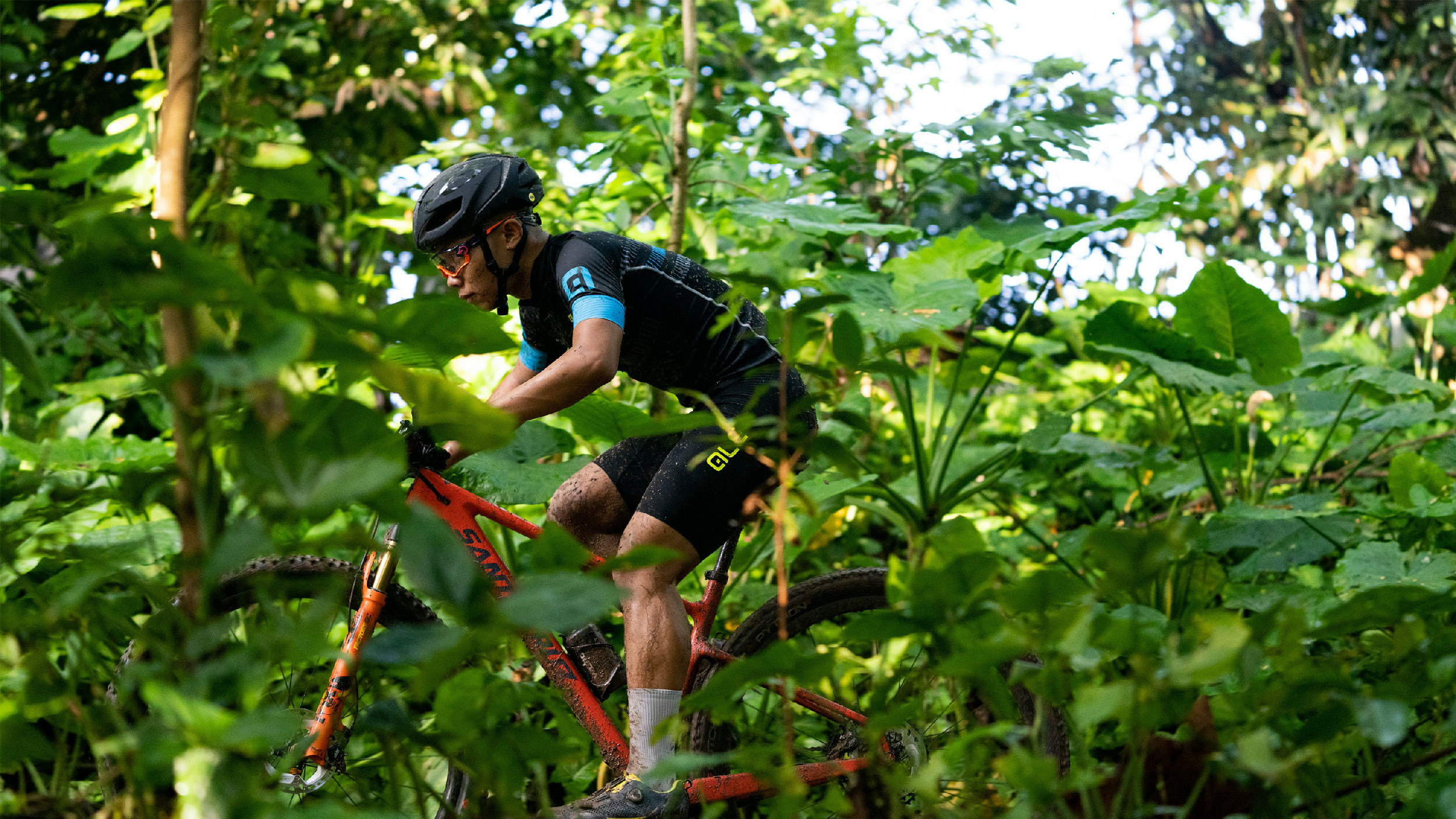
Los 10 commandments of sports training
To help you a little better in sports training we have broken downten basic commandments to understand this and try to incorporate them into your daily life to improve your performance with the time invested.
1r commandment: Above all we are people.
This is one of the most basic principles that we have as preparers and that most of them should have., and above all, we are working with people, with their work and personal lives, with all that this means at the level of obligations and pace of life.
It is for this reason that we must keep in mind that first we have people in our hands and then athletes (in this case, cyclists), with what we shouldempathize with their schedules and personal limitations.
This is why it is important to understand that our body has limits., when it comes to resistance, speed and strength. They shouldn't be reached very often and the feeling you should have at the end of most workouts is that you could have done more than planned..
If otherwise you approach this limit too often, and you do it for prolonged periods of time, you will be exceeding the body's ability to adapt and you will exceed the consistency of the training.
2Th commandment: Consistency in training.
Interruptions in consistency are usually a consequence of not following another commandment that we will talk about later: listen to your body. If we overtrain for a period of time we can add extra fatigue to our workload., fall sick or get injured.
Train consistently without overdoing it, It is the path to constant improvement in physical condition and greater performance in competition., the key element we are pursuing with training.
The key to this consistency is moderation of workload combined with adequate rest..
3r commandment: Get enough rest.
During rest periods is when our body adapts to the training load and the stress that this entails., making it stronger. Without rest there is no improvement because there is no adaptation.
As training stress increases, rest is becoming more and more necessary. Most cyclists understand this concept but they simply understand it mentally., not emotionally, Since many times when they are given a short rest period, the majority do not understand this moment, but if you want to improve, you must rest.
4th commandment: Train with adequate planning.
Athletes do not reach their maximum performance randomly or by chance., quite the opposite, most work with a training plan structured by a qualified trainer or that they “self-execute”.
A solid training plan is essential to improve in almost all initiatives and facets of life, and yet, few self-trained cyclists have it.It has been proven that the majority of athletes improve if they follow a plan constantly., but follow it for a certain period of time to see its fruits.
Sometimes these plans may be poorly designed or structured., but still, work. Therefore, It is important to always follow said plan and not abandon it in order to check whether or not the set objectives have been met..
5th commandment: Train in a group rarely.
Sometimes going out riding with a group is beneficial in terms of motivation since we are above all in a social sport.. Training with people develops a series of skills that are not worked on individually: it provides experience in career dynamics, improves the handling capacity of the bike and makes time “pass” much faster.
But sometimes we are not interested in going out in a group because the pace of this group is too high or too low to be able to follow your training plan well.. We also, If we have some type of interval work, it is very unlikely that the group members will accept this type of work and we cannot go together in training..
We must know when to go out in a group and when not to., For example, In the general base period it is interesting to go out in a group as long as you can ride comfortably in it. Instead, in competitive or specific periods where certain components of training must be developed, Better to shoot alone or with colleagues who have similar jobs.
6th commandment: Reach the maximum.
Our planning and work planshould lead us to optimal physical condition for the most important tests on our calendar. In this we will have to prioritize which are the important and less important races., arriving in the best possible conditions in the former than the latter.
A skilled runner uses second races to gain experience and pace in competition., or simply to check your physical condition. If all the races on our calendar are important, we cannot expect maximum performance in all of them, It's a matter of priorities.
7º commandment: improve weak points.
Most cyclists or athletes spend a lot of time working on aspects that they are already good at., For example: a climber spends hours training with slopes.
First of allThese athletes must identify their weak points and try to improve them without leaving aside the aspects where they already stand out.. It is a matter of understanding “our limitations”. Once these have been identified, The mental condition is as or more important than the physical condition where we must face these limitations without fear and work on them..
8Th commandment: Trust in your training.
To give you confidence in what you are doing session after session during the year you should evaluate your training during the season, and no longer in competition, if not with field tests or stress test.
There is nothing worse than believing you are making good progress towards your goal and then, on race day, Thinking that you are not physically prepared.This is why it is important to evaluate training and trust the plan., because if these tests do not go as they should, you can redirect it, but first of all, trust in planning.
9th commandment: Our body is intelligent.
Most of us do not make a living from cycling and its competition, therefore, Don't get frustrated if you don't get the result you so anxiously expected and appreciate why it hasn't arrived.It is important to listen to our body since it often gives us “signals.”” that we must interpret and know how to apply the correct correction.
Respecting the rest periods as we have said before or not doing that last series that we had planned because we are exhausted from work is also part of the training..
10Th commandment: Commit to the objectives.
Achieving annual objectives is a task of 24 hours and 365 days a year of dedication where it not only depends on the training but also on your way of life, depending on the level of demand you have.For example, how you eat will vary., you sleep, you work...
Committing to goals is crucial, but we all have a comfortable level of commitment, where finding personal balance with training and the rest of your personal life is part of this commitment as well..
We only have 1 hour to train
Take advantage of that hour of training. Many times we find that we do not have much time

Road to Tokyo
This week's entry on our blog is going to be about how the season has been planned 2021 to
Tapering or refinement
When the main competitions of the athlete who have marked in his calendar D approach